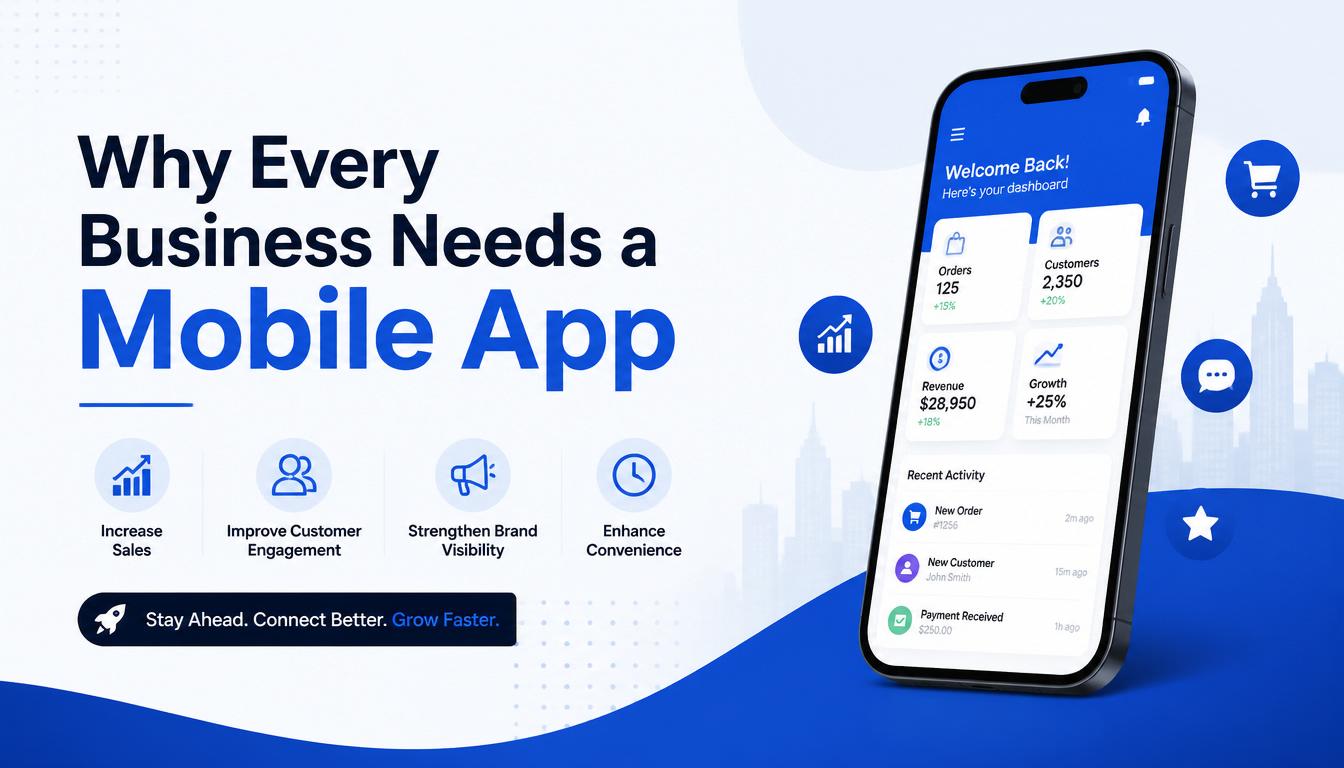
As digital technology continues to evolve, mobile apps have become an essential tool for businesses looking to improve customer experience, increase engagement, and stay competitive. In this era, consumers rely heavily on smartphones for shopping, communication, entertainment, and accessing services online.
Businesses that invest in mobile applications can provide faster, more personalized, and more convenient experiences for customers while improving operational efficiency and brand visibility.
If your plans don't include mobile, your plans are not finished.
Wendy Clark, Coca-Cola
Here’s why your business needs a mobile app.
1. Increased Customer Engagement
Mobile apps provide direct and continuous interaction between businesses and customers.
How Apps Improve Engagement
- Push notifications
- In-app messaging
- Personalized content
- Instant updates
- Faster communication
Apps make it easier for businesses to stay connected with customers and encourage regular interaction.
2. Improved Customer Experience
Customers expect fast, simple, and convenient digital experiences. Mobile apps provide smoother navigation and quicker access to products or services compared to websites alone.
Benefits of Better User Experience
- Faster loading speed
- Easy navigation
- Personalized interfaces
- Secure transactions
- Convenient access to services
A positive user experience increases customer satisfaction and loyalty.
3. Boosts Brand Visibility and Recognition
Having a mobile app keeps your business visible on customers’ devices daily.
Branding Benefits
- Stronger brand awareness
- Professional business image
- Improved customer trust
- Better customer retention
A well-designed app helps businesses establish a stronger digital presence.
4. Increases Sales and Revenue Opportunities
Mobile apps simplify the buying process and make it easier for customers to complete transactions quickly.
Features That Drive Sales
- Online ordering
- Secure payment integration
- Personalized recommendations
- Loyalty programs
- Promotional notifications
Apps create more opportunities for customer conversions and repeat purchases.
5. Provides Better Customer Support
Mobile apps improve customer communication and support experiences.
Customer Support Features
- Live chat systems
- Help centers
- FAQ sections
- Support ticket systems
- Instant notifications
Faster support responses improve customer satisfaction and trust.
6. Gives Businesses a Competitive Advantage
As more businesses adopt digital technologies, companies without mobile apps risk falling behind competitors.
Competitive Benefits
- Improved customer convenience
- Better digital accessibility
- Enhanced service delivery
- Stronger customer relationships
Businesses with mobile apps are often viewed as more modern and customer-focused.
7. Supports Business Automation and Efficiency
Mobile apps can automate business processes and improve operational efficiency.
Examples of Business Automation
- Appointment booking
- Order management
- Inventory tracking
- Customer management
- Payment processing
Automation reduces manual workload and improves productivity.
8. Enables Personalized Marketing
Mobile apps allow businesses to collect user behavior data and deliver personalized experiences.
Personalized Marketing Features
- Custom recommendations
- User behavior tracking
- Targeted promotions
- Personalized notifications
Personalized marketing improves engagement and customer retention.
9. Access to Valuable Business Insights
Apps provide businesses with useful data that can improve decision-making and customer understanding.
Insights Businesses Can Track
Data-driven insights help businesses improve services and marketing strategies.
10. Supports Future Digital Growth
Mobile technology continues to grow rapidly, and businesses need scalable digital solutions to remain relevant.
Mobile Apps Support
- Digital transformation
- Scalable operations
- Integration with modern technologies
- Long-term business growth
Investing in a mobile app positions businesses for future opportunities and evolving customer expectations.
Industries That Benefit From Mobile Apps
Many industries can benefit from mobile applications, including:
- E-commerce
- Real Estate
- Healthcare
- Education
- Logistics
- Hospitality
- Finance
- Food and restaurant businesses
Mobile apps help businesses across different sectors improve customer experience and operational efficiency.
Final Thoughts
In this era, mobile apps are no longer optional for businesses that want to remain competitive and digitally relevant. A mobile app helps improve customer engagement, increase sales, strengthen brand visibility, and support long-term business growth.
Businesses that embrace mobile technology can provide better customer experiences, streamline operations, and position themselves for success in an increasingly mobile-driven world.

Leave a Reply
Your email address will not be published. Required fields are marked *